Creatine: Game Changer or Just Hype?
Creatine is one of the most researched and evidence-supported supplements for sport performance. Your body naturally produces creatine in the liver and kidneys from amino acids, but only in small amounts — roughly 1–2 grams per day. You also obtain creatine from foods like red meat and fish; however, to reach the performance-enhancing dose used in research (about 3–5 grams daily), you would need to consume approximately 1–2 pounds of red meat or fish every day. For most athletes, that amount is neither practical nor desirable. Supplementing with creatine monohydrate can help saturate your muscle stores, improving your ability to regenerate ATP (your body’s quick energy source), which supports strength, power output, sprint performance, training volume, and recovery. Emerging evidence also suggests potential benefits for cognitive function, injury recovery, and female athletes across the menstrual cycle.
Despite strong safety data in healthy individuals, creatine is often misunderstood. Common myths include that it is a steroid (it is not), that it damages the kidneys (research does not support this in healthy individuals), or that it causes harmful weight gain (most early weight gain is due to increased intracellular water in muscle, which supports performance). Working with your sports dietitian ensures the dose, timing, and formulation are appropriate for you, and that supplementation aligns with your sport, health history, and performance goals. Creatine is not necessary for every athlete — but when used strategically, it can be a powerful, evidence-based tool.
References (please click on the studies to access the PUBMED article):
Creatine Supplementation in Women’s Health: A Lifespan Perspective
Creatine Freebies
Click on the images below to download your free copy!
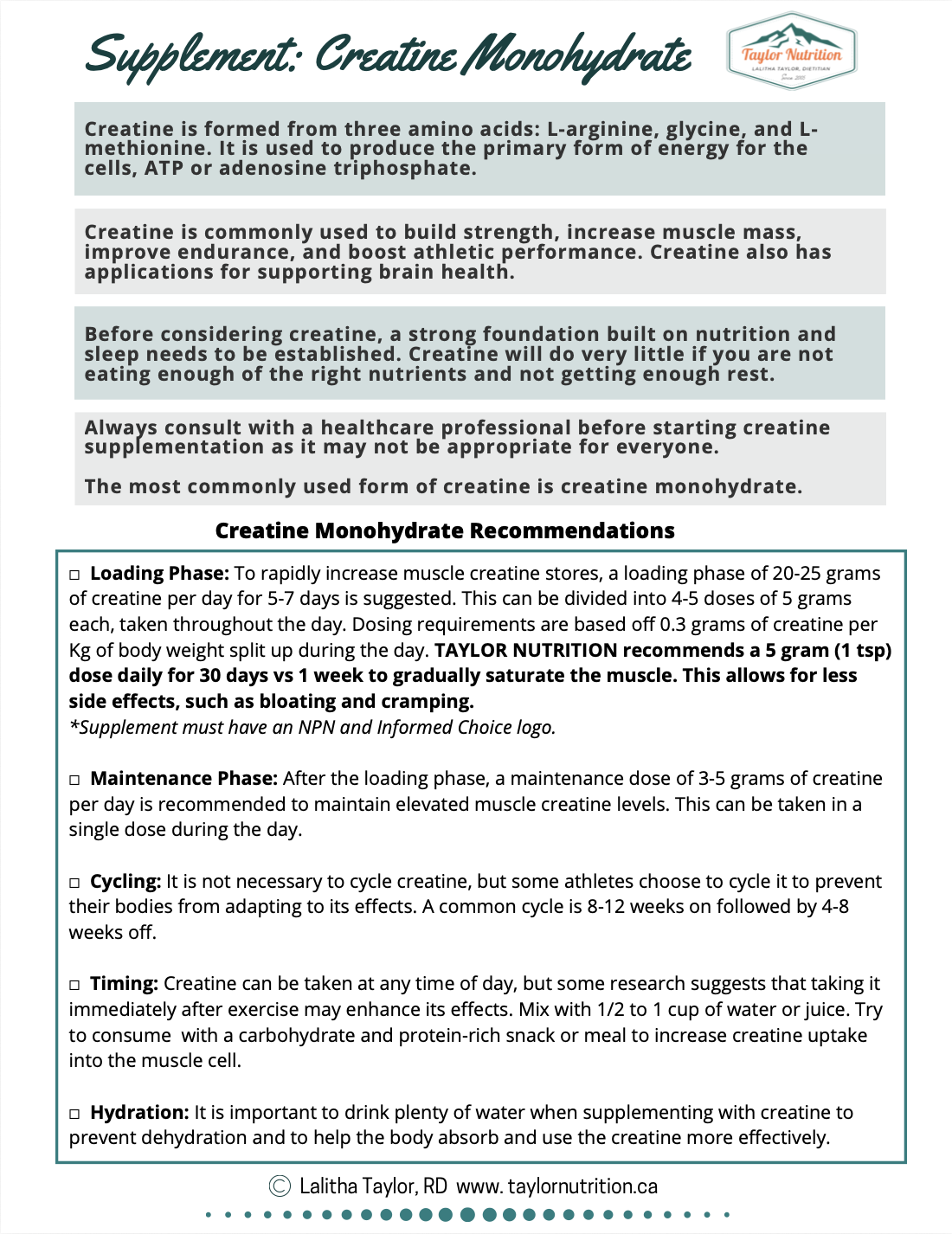
How to Supplement with Creatine Monohydrate?
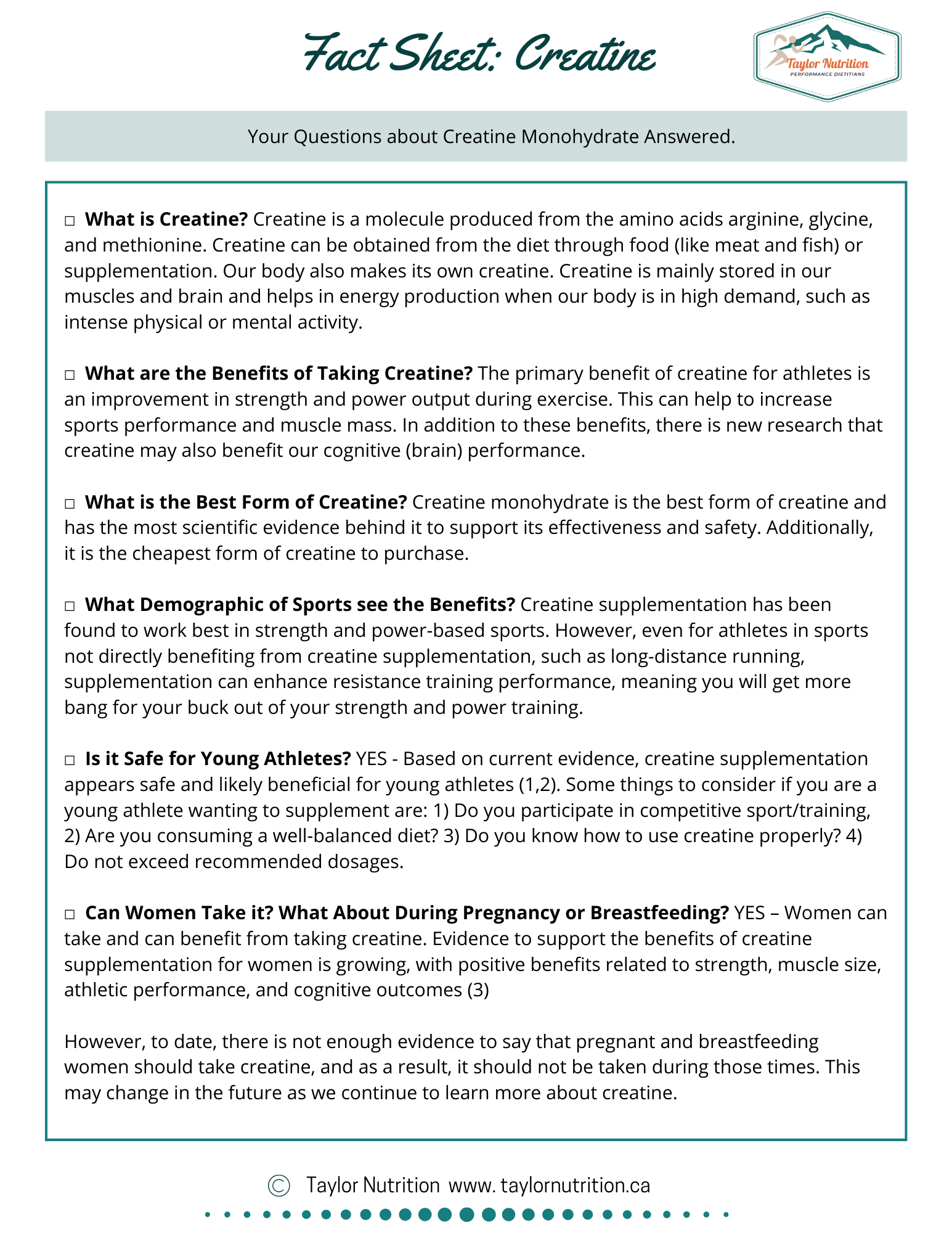
Creatine Fact Sheet